Two Days in Walter's Málaga
Old Town, white villages, and Juan's fideuà
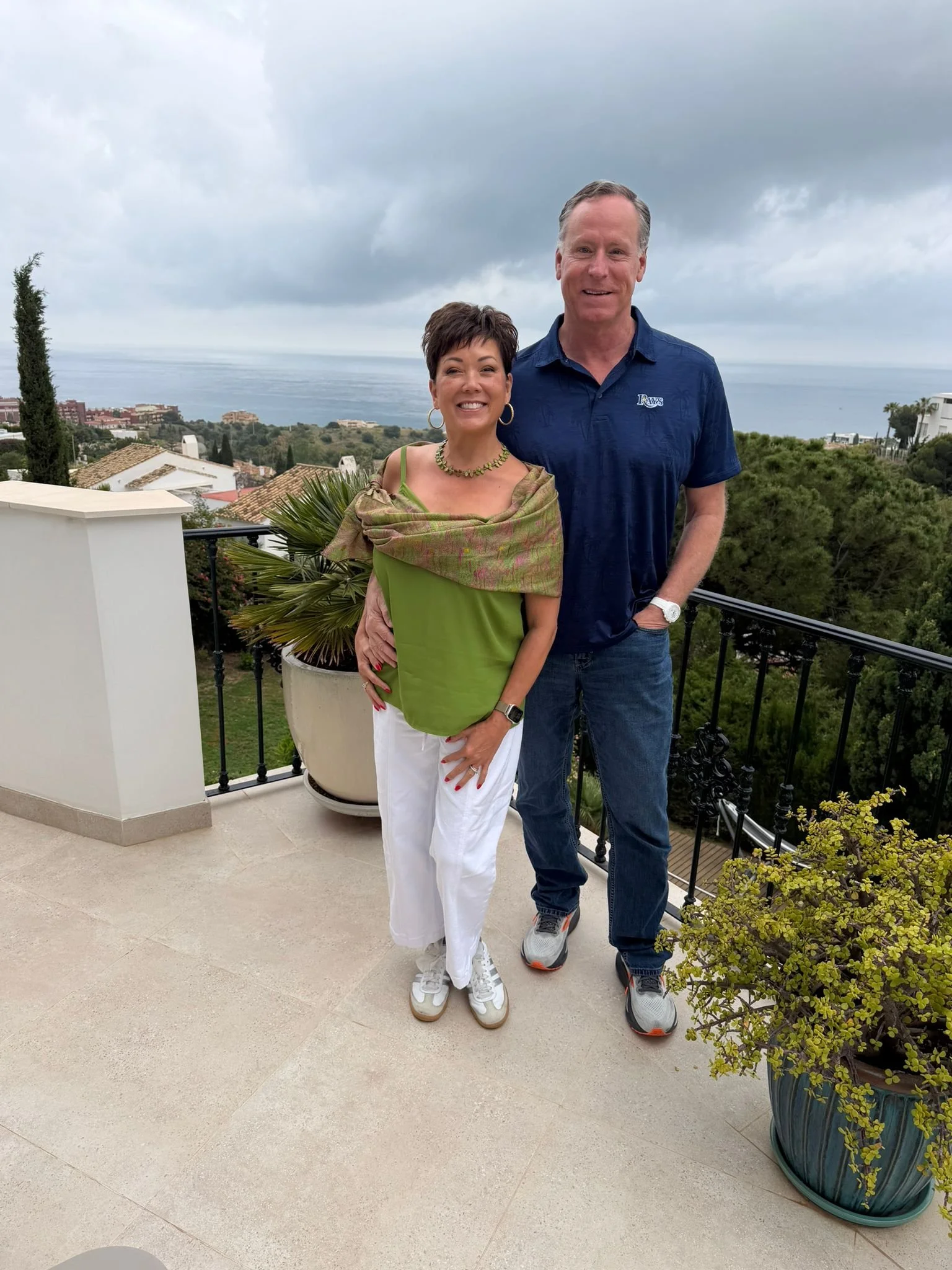
From the balcony. The Moroccan coast is somewhere out there.
Two days isn't enough time in Málaga. We knew that going in. So instead of trying to see it, we let Walter — my friend of 41 years, our host for the week — show us his.
(If you're new here, the backstory is in the last post.)
He's lived all over — Bombay, Sri Lanka, Mallorca, Brussels, Vienna — but Málaga is where he and Juan retired, and it's where his ninety-two-year-old mother now lives, on the main floor of the home Walter renovated specifically so she could stay home. That's the geography of this trip. Everything else circles around it.
Friday: Centro Histórico
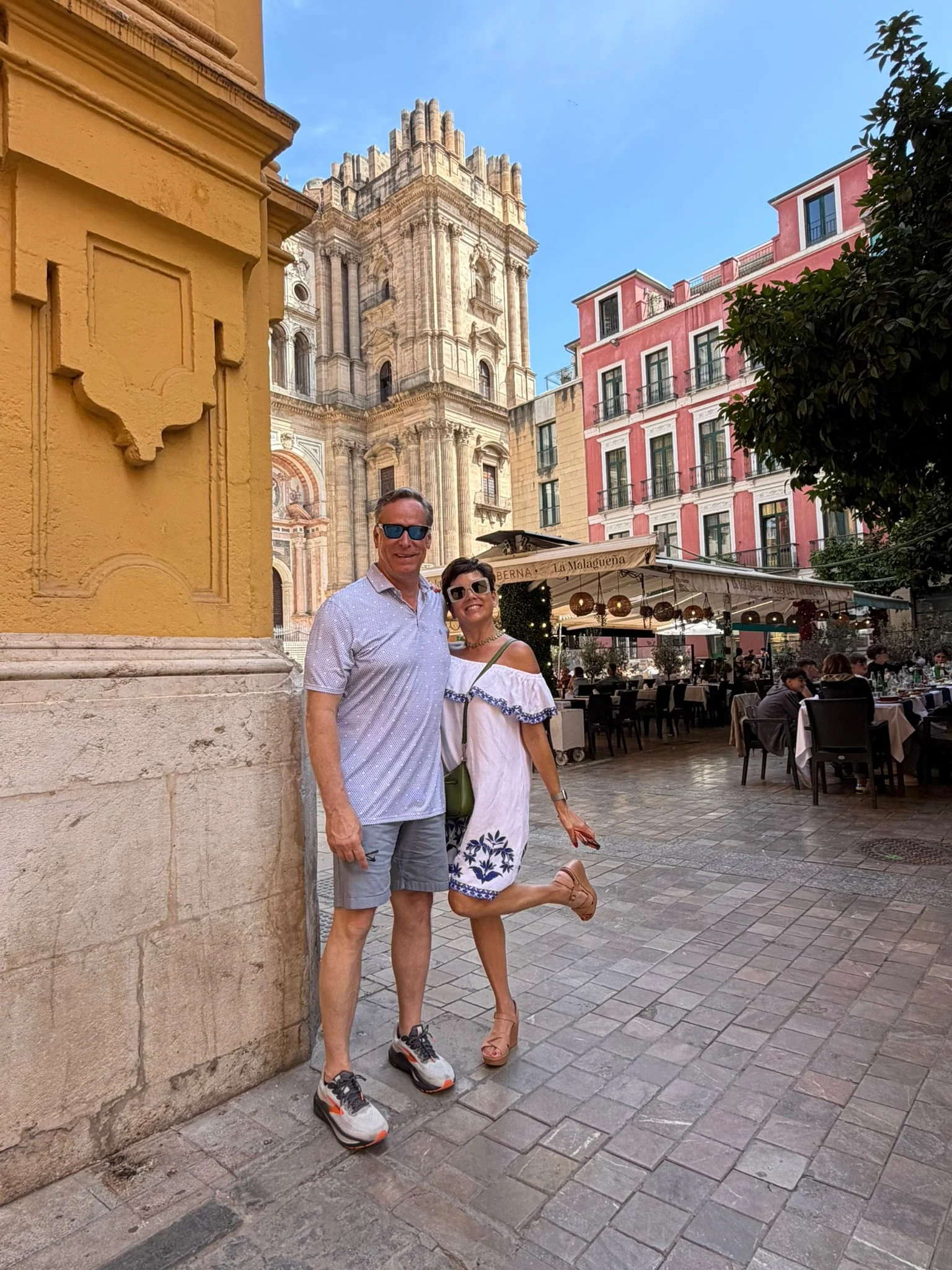
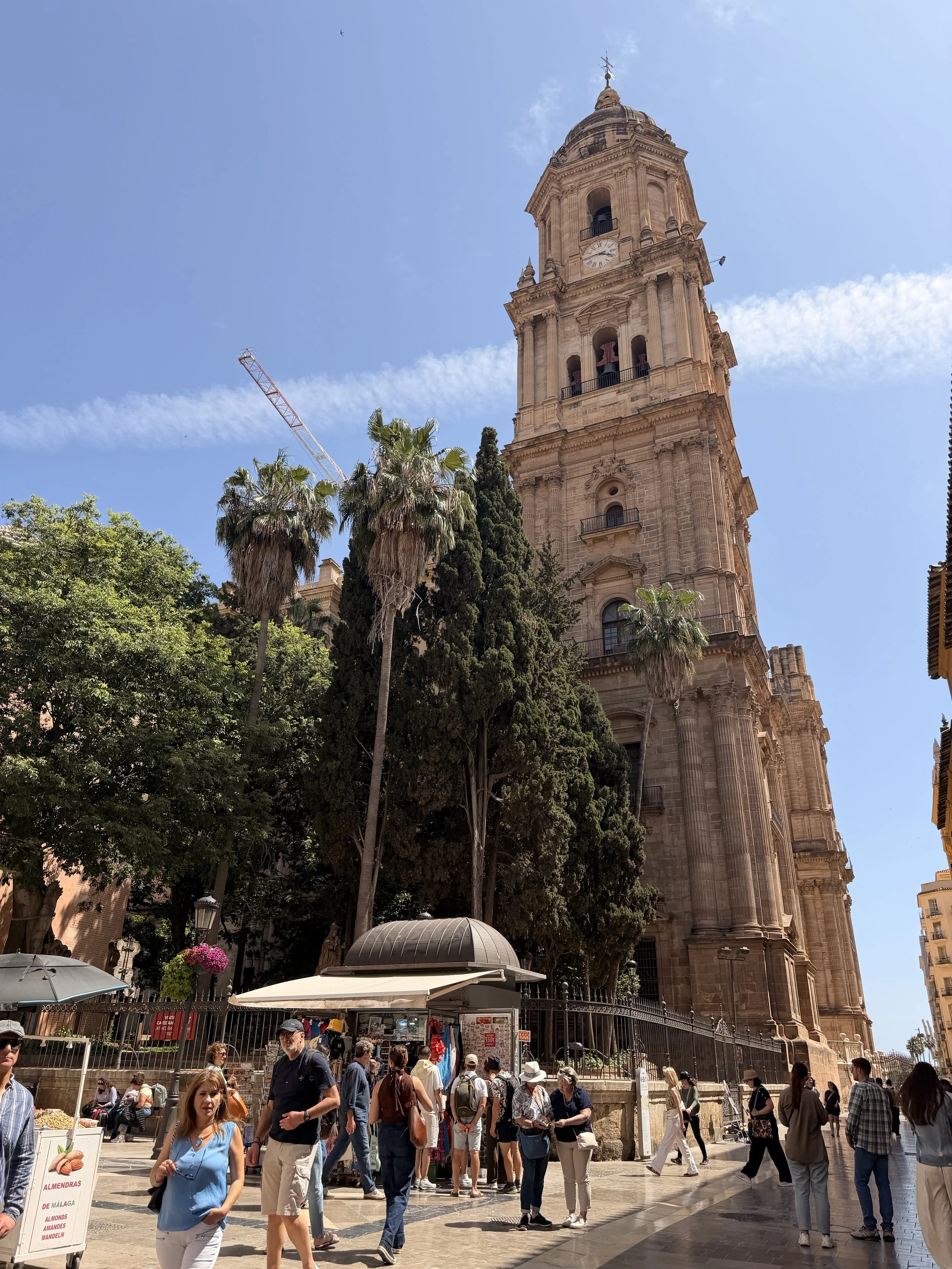
La Manquita — "the one-armed lady." Málaga's cathedral has been waiting on its second tower since 1782.
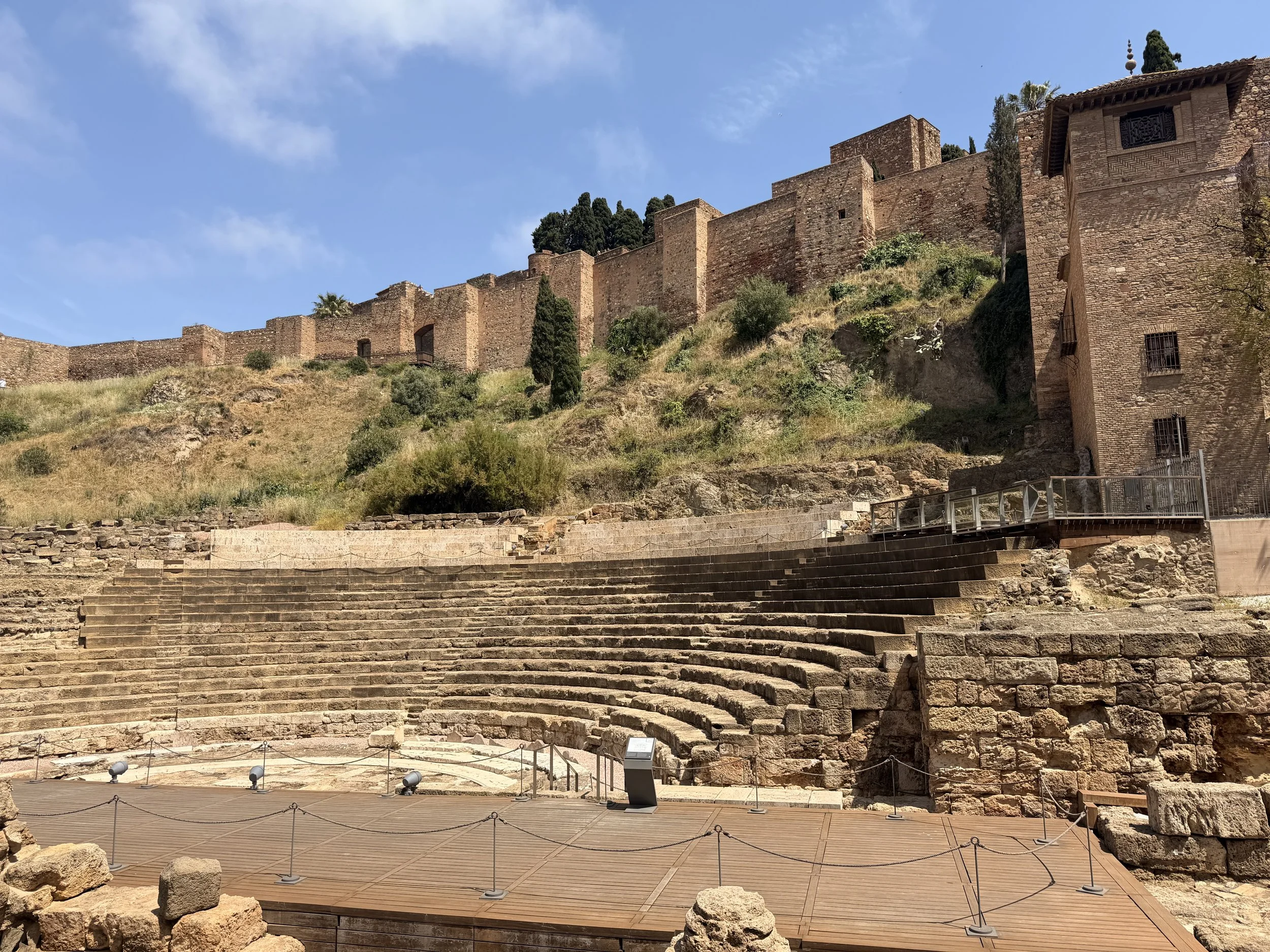
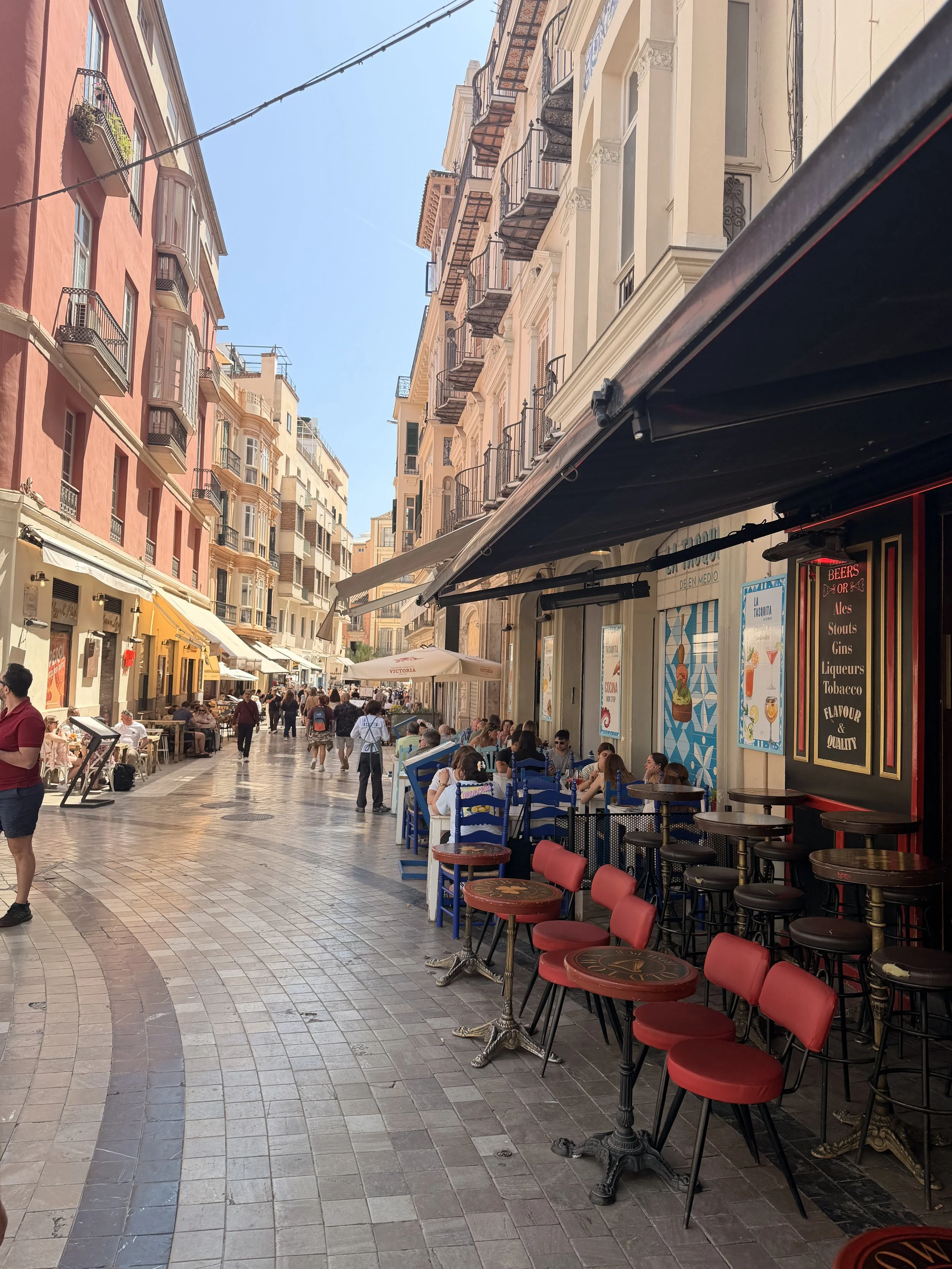
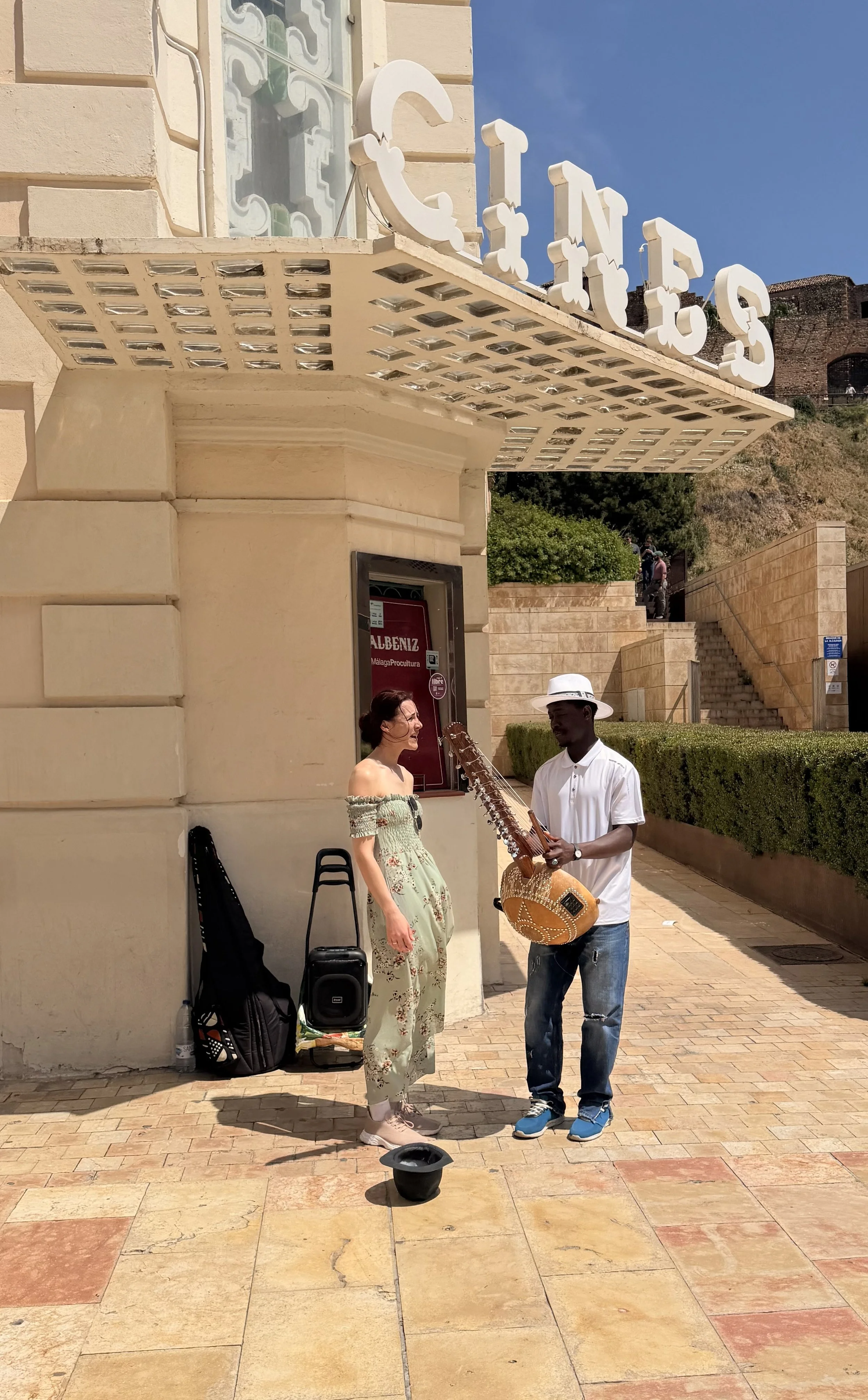
We started downtown. Walter walked us through Centro Histórico the way only a local can — past the cathedral they call La Manquita (more on that below), through narrow streets full of tapas tables already filling up at noon, and into the Roman theater that sits at the foot of the Alcazaba, casually two thousand years old.
A few things worth knowing if you're planning your own visit:
The cathedral is called La Manquita — "the little one-armed one" — because the second bell tower was never finished. Funds got redirected, the story goes, to support the American Revolution. So you can thank Málaga for some part of your Independence Day.
The Roman theater is free, hidden in plain sight, and sits directly under the Moorish Alcazaba. Phoenicians, Romans, Moors, Spaniards — all stacked on top of each other in one walk.
Plaza Uncibay at lunchtime is a master class in not rushing.
Saturday: White Villages and a Marina
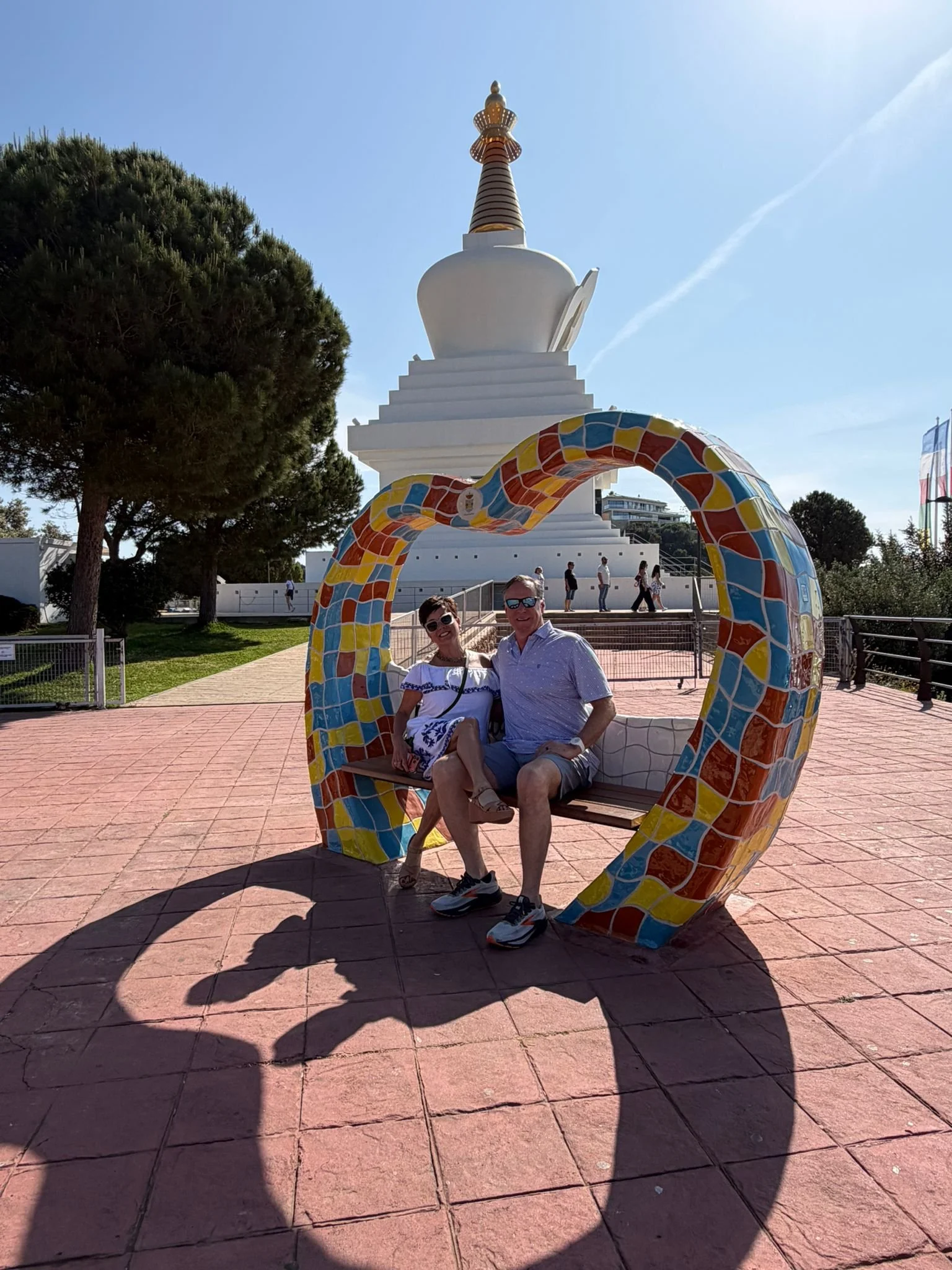
The largest Buddhist stupa in the Western world. In a Catholic Spanish town. Yes, really.
Saturday, Walter took us up the coast. First stop: Benalmádena, where you'll find the largest Buddhist stupa in the Western world — a 33-meter white-and-gold monument on a hill overlooking the Mediterranean, built in 2003. It does feel a little unexpected — a serene Buddhist landmark overlooking one of Spain's busiest coastlines. But the location was intentional. It sits on a hill facing the Mediterranean, where it's open and highly visible. In Buddhism, stupas are placed where they can spread positive energy outward. I know that's how it made me feel.
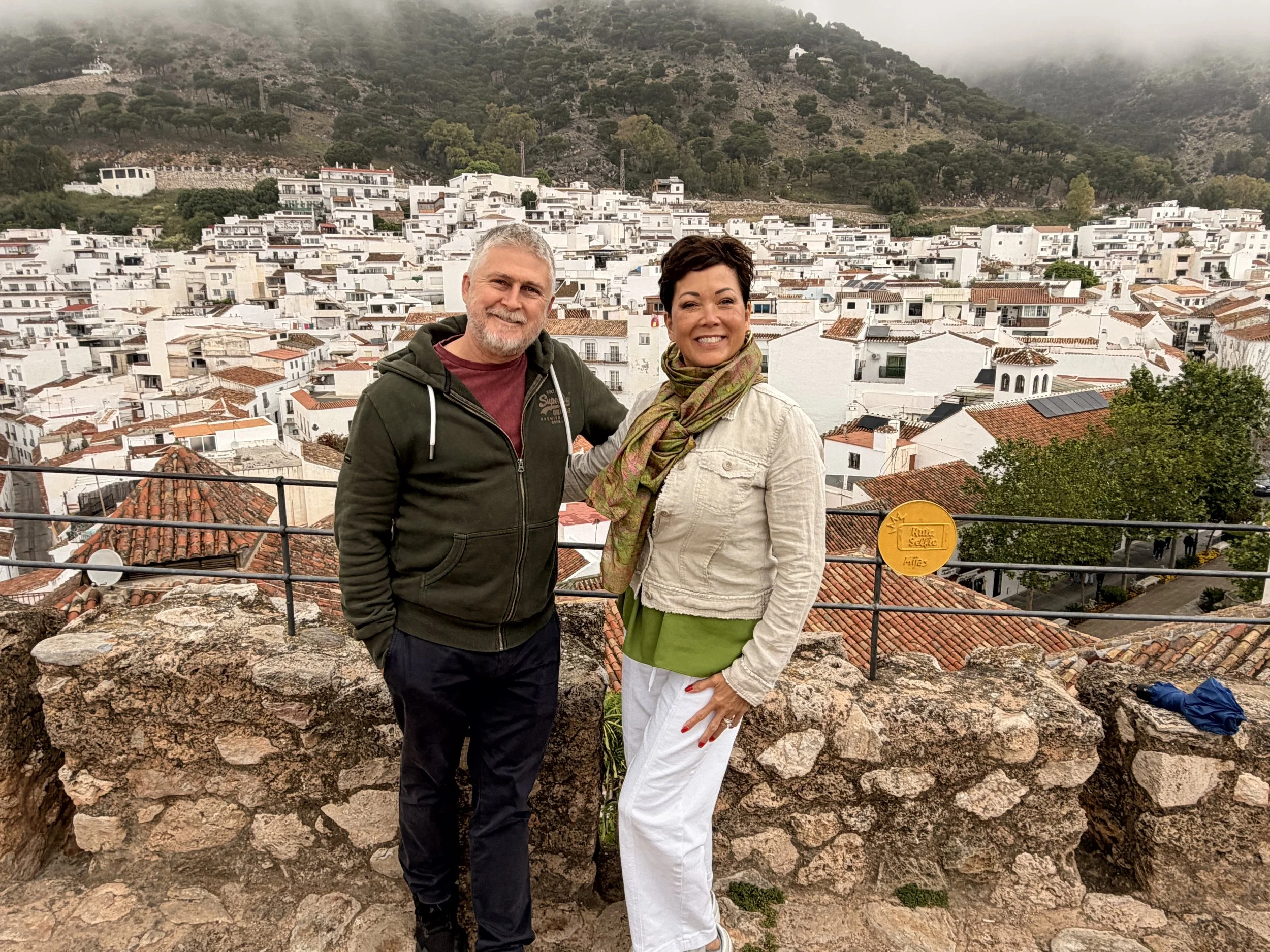
Mijas Pueblo. The whitewashed Andalusian village every postcard is trying to be.
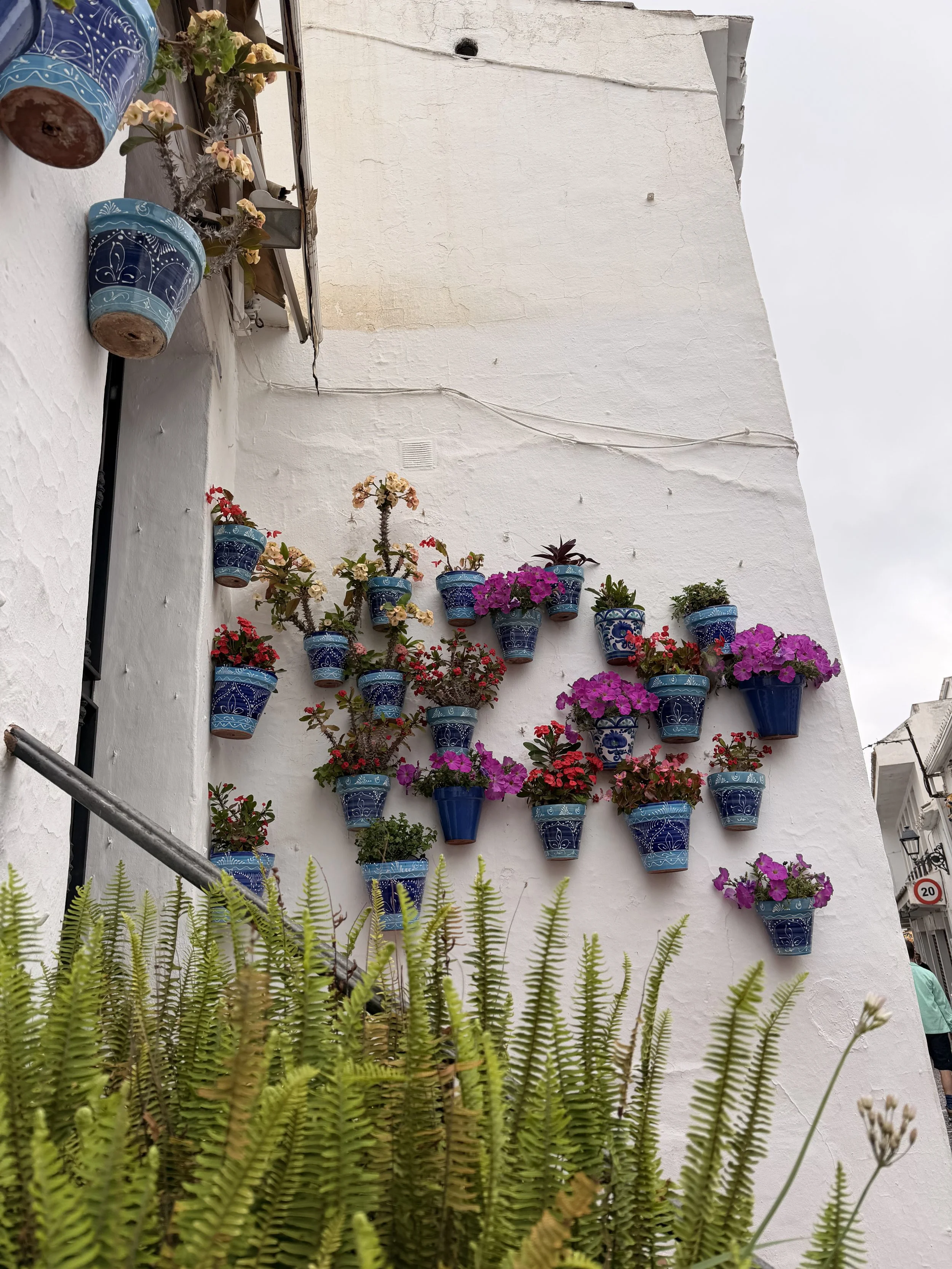
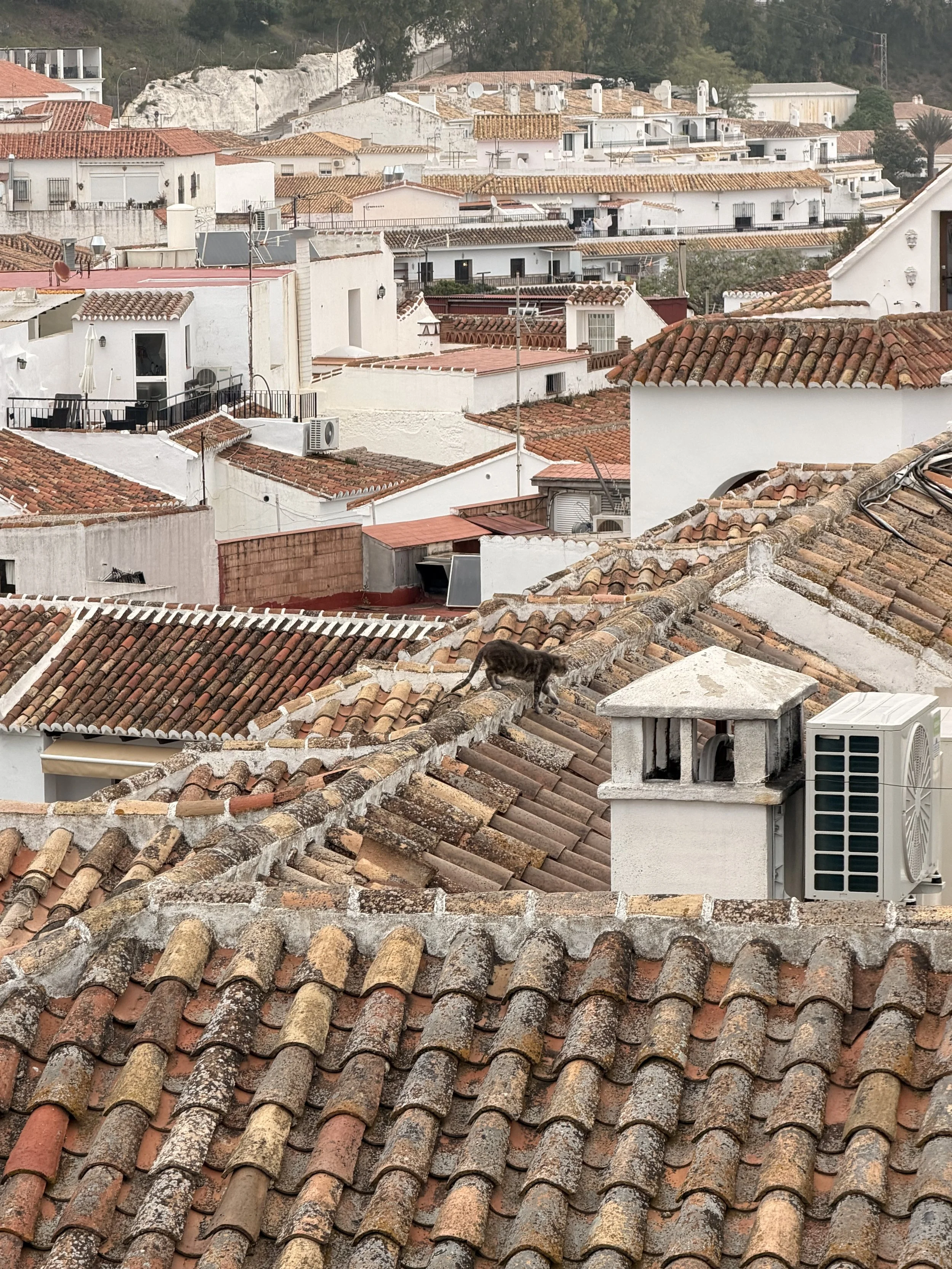
Then up the hill to Mijas Pueblo, the white village of every Andalusia daydream. Narrow lanes, whitewashed walls, donkey taxis (we passed), and a burst of cobalt-blue flower pots that seemed to explode against the whitewashed wall and stopped me in my tracks.
We finished at Marbella — specifically the marina, where the superyachts dock and remind you that this stretch of coast has another life entirely. Beautiful, glittery, and not really our speed. If you have to choose: Mijas over Marbella, every time. Mijas has the soul. Marbella has the boats.
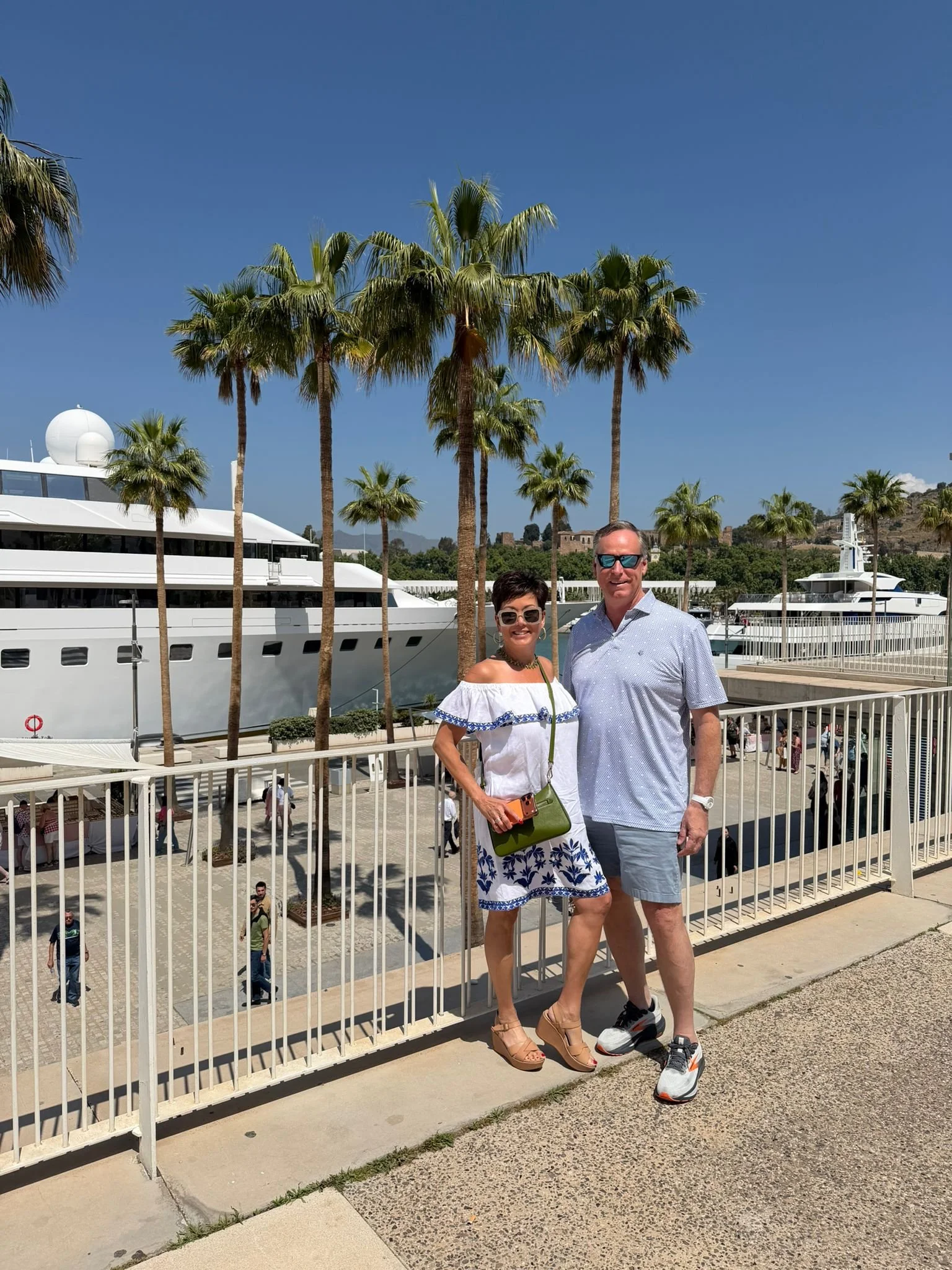
Marbella marina. Pretty. Not ours.
Home, Where the Cooking Happens
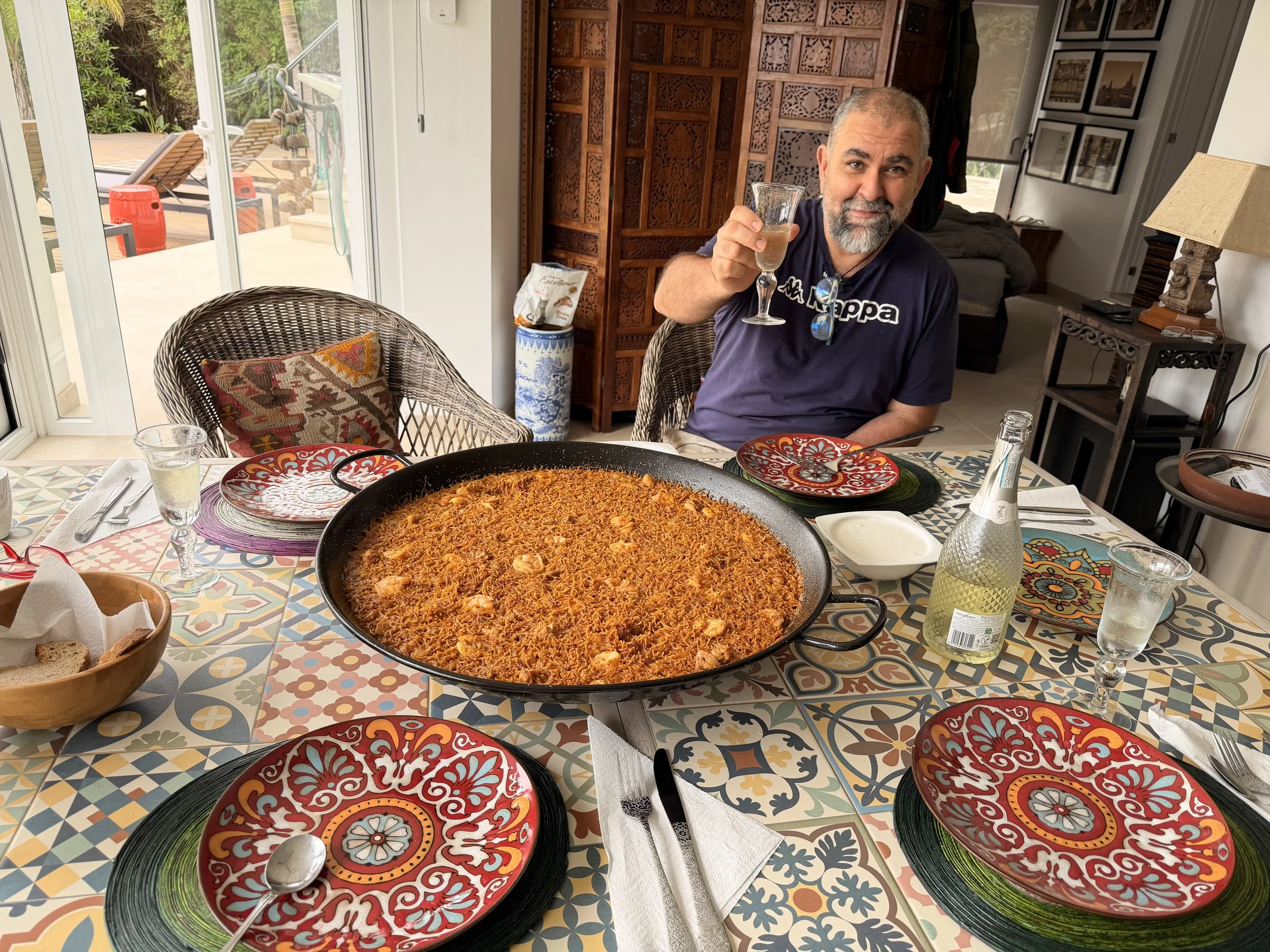
Juan, very pleased with himself, and rightly so.
Back at the house, the real Spain happens at the table. Juan is the cook of this household — proud of his Spanish heritage, even prouder of his fideuà, a Valencian cousin of paella made with toasted short noodles instead of rice. Toasting the noodles in olive oil. A pan the size of a manhole cover.
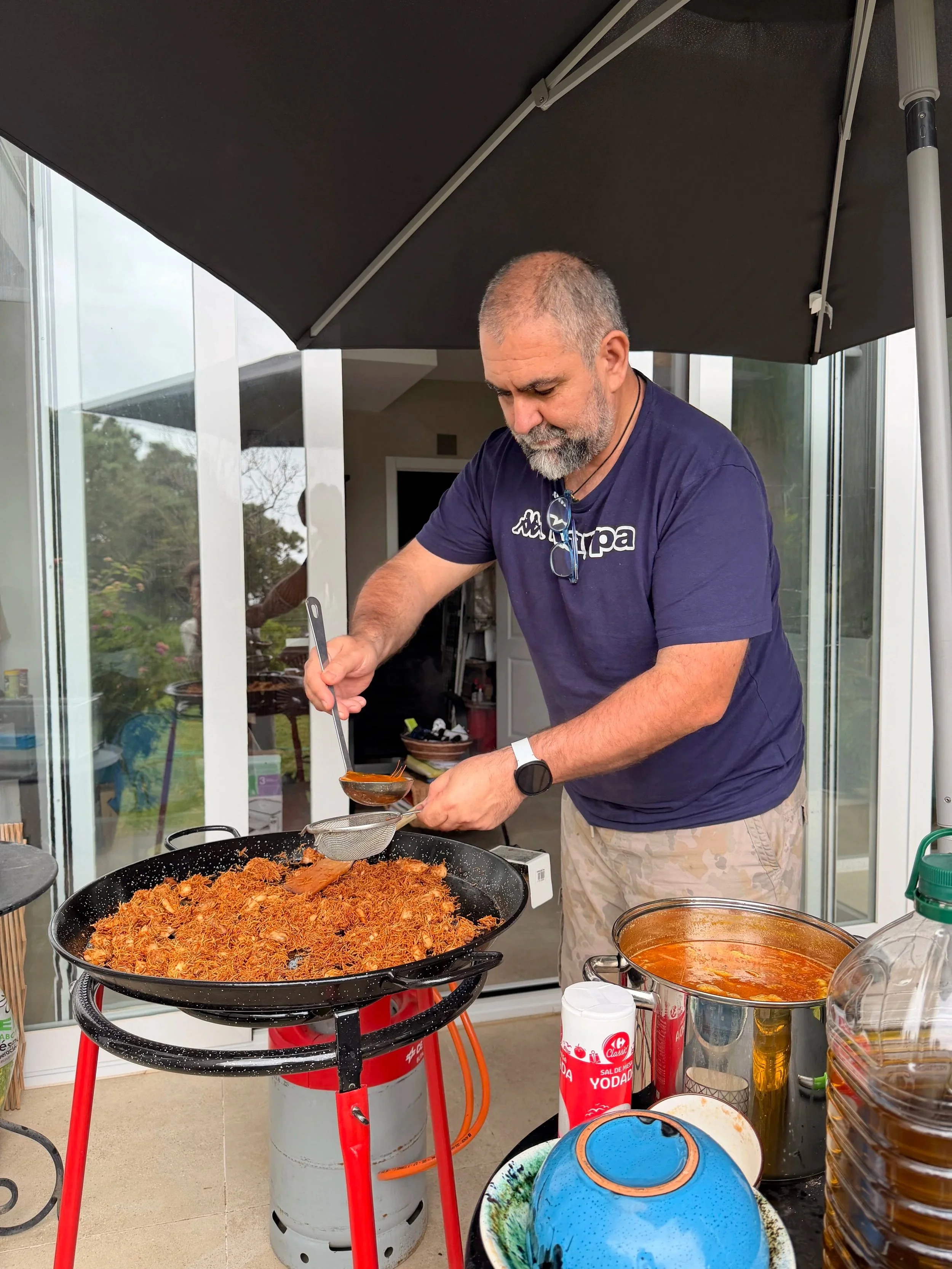
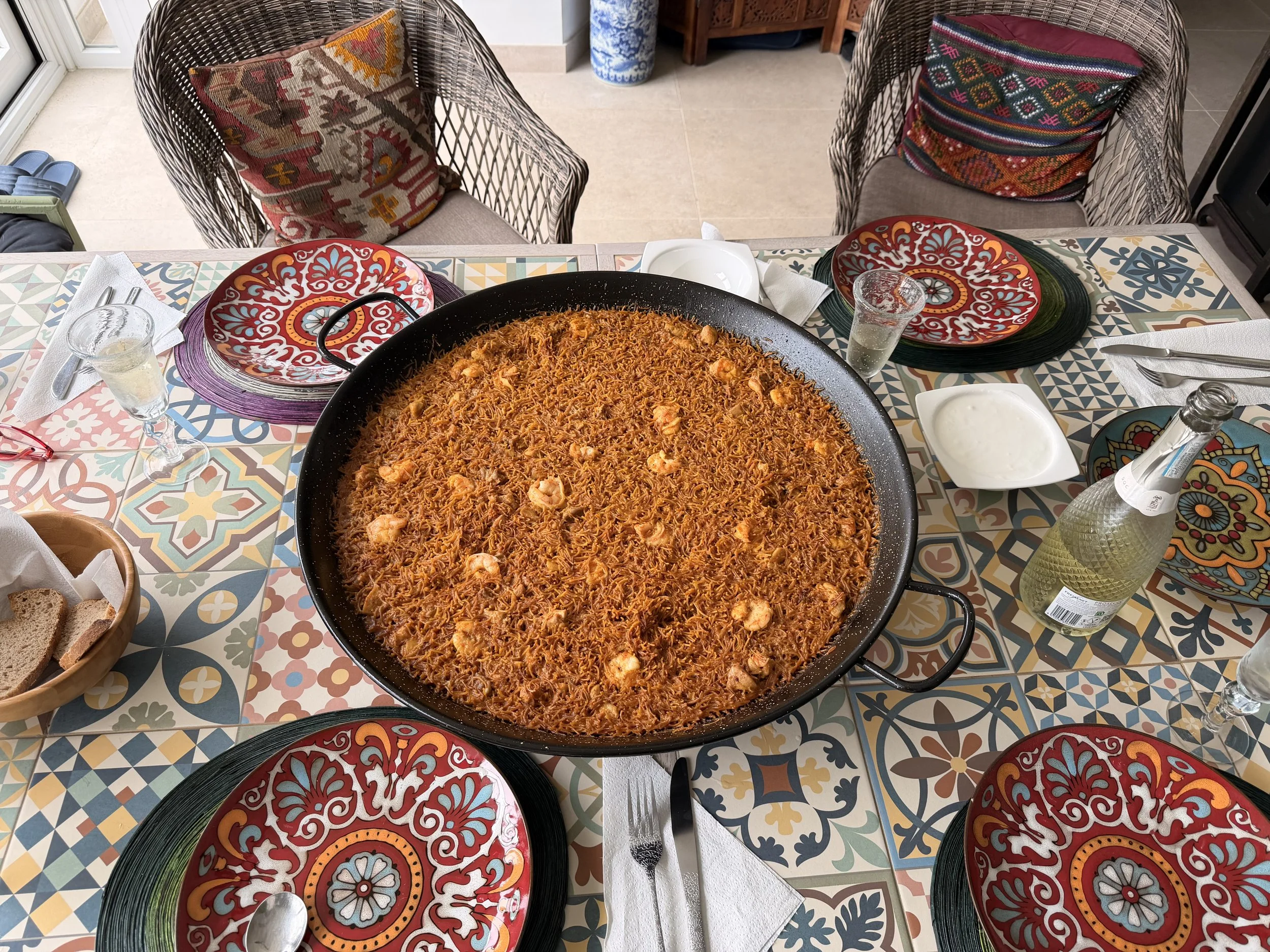
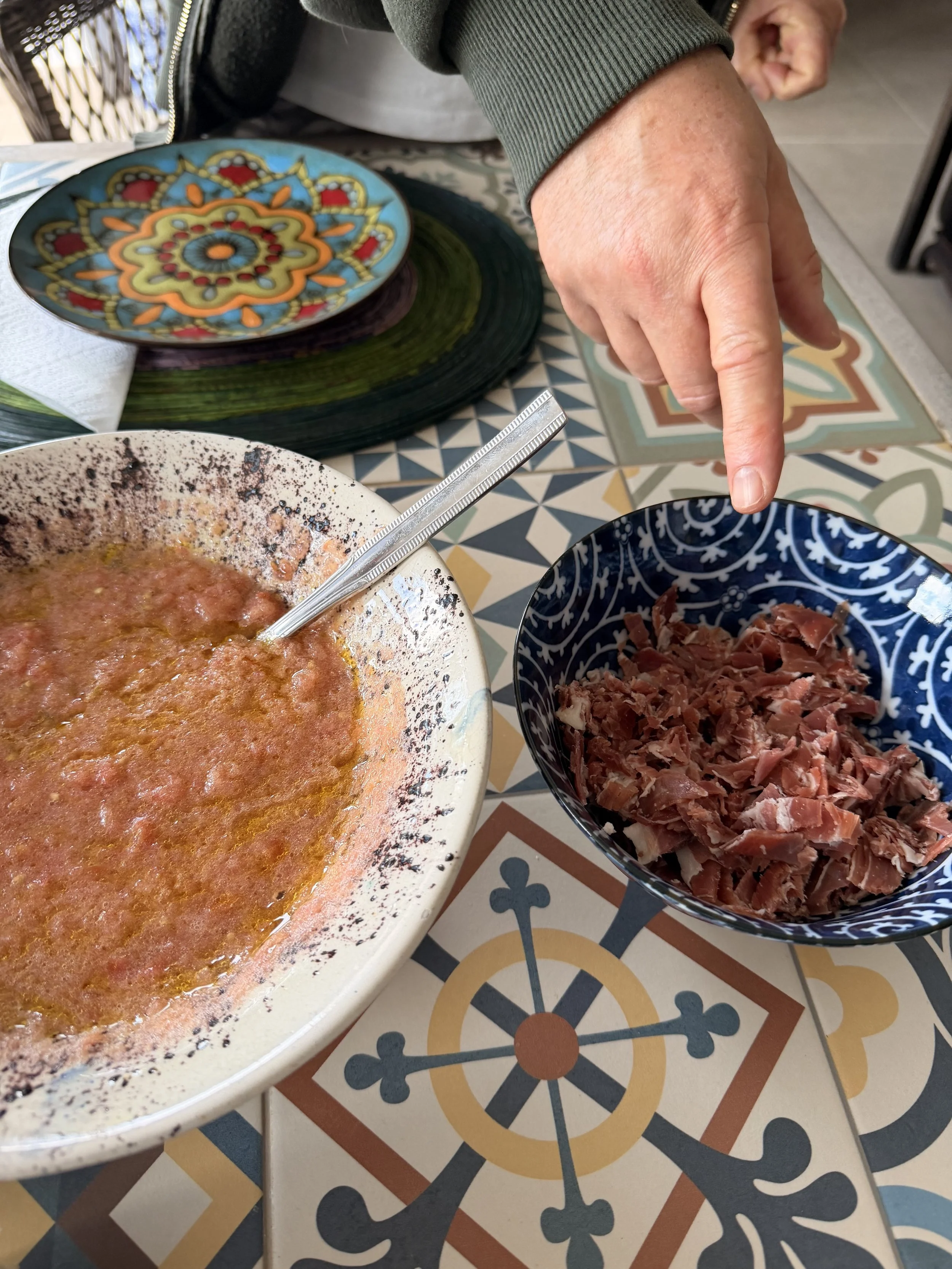
And the next morning: breakfast was pan con tomate — grated tomatoes in olive oil over toasted bread with shaved Serrano ham. The simplest, best Spanish breakfast there is.
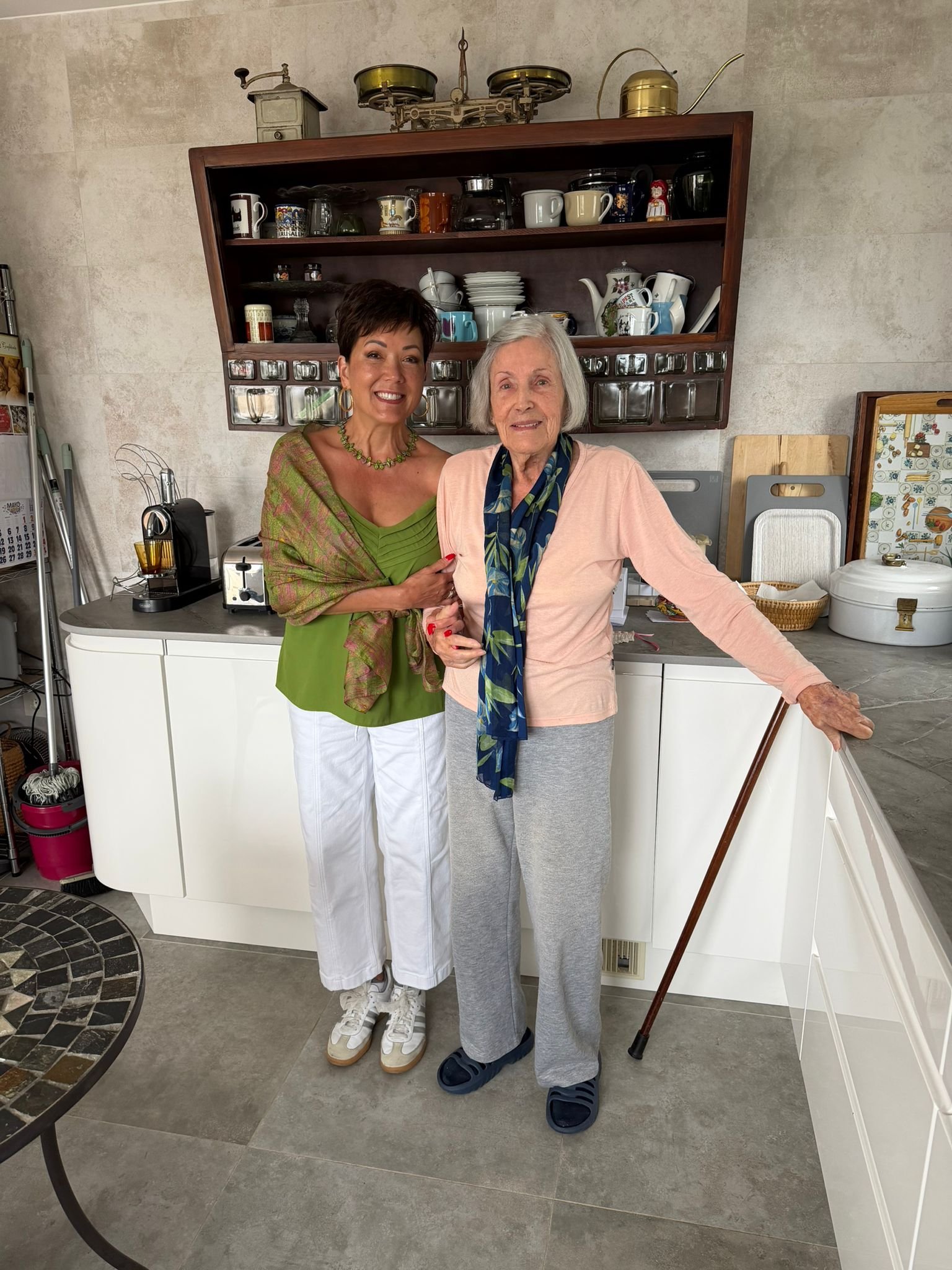
Maria Luisa. Cadiz, Spain
We also got to spend time with Walter's mother, Maria Luisa Masur — ninety-two years old, originally from Cadiz, Spain. She grew up there, trained as a seamstress, and married an Austrian hotelier — and from that point her life was full of geography. Bombay. Sri Lanka. Mallorca. Brussels. And now, Málaga.
She still does needlework. The crochet pieces in the house are hers — delicate, intricate, the kind of work that reminds you what hands can do when they've been at it for ninety years.
(My family will recognize the coincidence — Scott and I grew up in Cadiz, Kentucky, named after hers. There's a much longer story about that, coming later.)
She joked that I was the one who'd once slept in her bed. She's right. I did, decades ago and a continent away. But that, too, is a story for another post.
Two days. One household. A whole stretch of coast.
We're already booked to come back.
More to come — Next London
